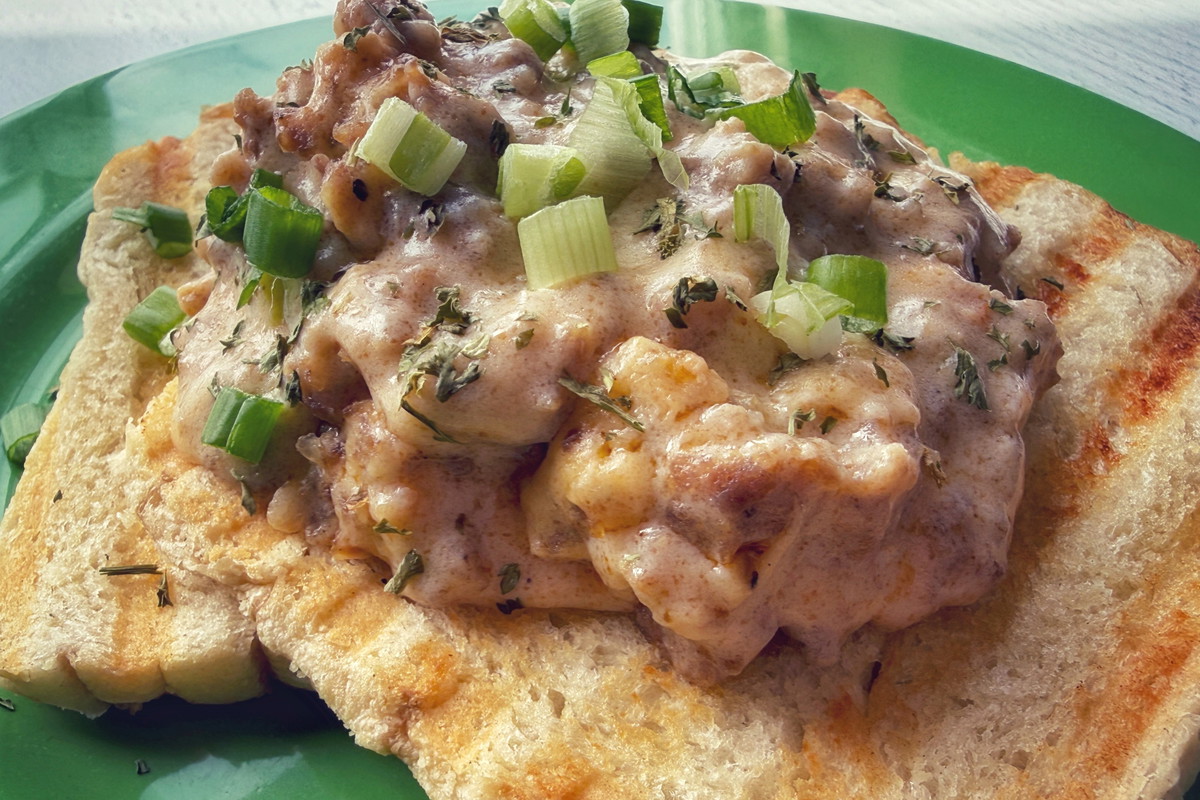
Southern Country Sausage Gravy
4
5 minutes
15 minutes
491
Thick, velvety, and aggressively peppered, Southern country sausage gravy is the cornerstone of Appalachian and rural Southern breakfast culture. Often referred to simply as sawmill gravy, the dish originated in the early 1800s in logging camps and farming communities across the American South.
Hard-working laborers needed an affordable, calorie-dense meal that could sustain them through grueling physical work. Camp cooks utilized cheap bulk pork sausage, captured every drop of the rendered pan drippings to build a flour roux, and stretched the pan juices with fresh milk. Poured over warm, flaky buttermilk biscuits, it turned kitchen frugality into one of the most celebrated comfort foods in American culinary history.
This recipe honors that heritage by browning breakfast sausage in a heavy cast-iron skillet, toasting the flour directly in the seasoned pork fat, and simmering it with whole milk into a creamy, savory gravy flecked with coarse black pepper.
Directions
- Brown and crumble the sausage: Place a large cast-iron skillet or heavy-bottomed stainless steel pan over medium heat. Add the ground sausage and cook, breaking it into bite-sized crumbles with a wooden spoon. Cook until thoroughly browned and crisp around the edges. Do not drain the grease. You need roughly 3 to 4 tablespoons of rendered fat in the pan. If the sausage was lean, stir in 1 tablespoon of butter.
- Cook the roux: Sprinkle the 1/4 cup of all-purpose flour evenly over the browned meat and fat. Stir constantly for 1 to 2 minutes so the flour coats the meat and absorbs the fat completely. This cooks out the raw flour starch flavor while maintaining a pale blonde roux.
- Incorporate the milk: Whisk gradually to eliminate lumps. Slowly pour in 2 1/2 cups of milk in a steady stream, whisking or stirring vigorously to lift all the browned fond from the bottom of the pan and ensure the flour incorporates smoothly without clumping.
- Simmer and thicken: Bring the mixture to a gentle simmer over medium-low heat, stirring frequently. As the starches hydrate and cook, the gravy will turn velvety and thick. If it becomes too thick before serving, whisk in the remaining 1/2 cup of milk a splash at a time until you reach your desired consistency.
- Season and serve: Stir in the coarse black pepper, salt, and cayenne. Taste before adding more salt, as many commercial breakfast sausages already contain substantial sodium. Remove from heat and ladle immediately over split warm buttermilk biscuits.
Recipe Note
Chef's Notes
Subbing Olive Oil for Butter: If your breakfast sausage is particularly lean and yields less than 3 to 4 tablespoons of rendered drippings, extra fat is required to build the roux. You can swap the 1 tablespoon of unsalted butter for olive oil at a 1:1 ratio. While traditional Southern gravy relies on butter or pure lard for a rounded, milky richness, regular or light olive oil works seamlessly without altering the texture. Use a standard cooking olive oil rather than an assertive, peppery extra-virgin variety, which can impart a fruity or bitter undertone that clashes with the milk base.
The Fond is the Flavor: Resist the urge to wipe out the pan or drain grease after browning the meat. The dark brown bits (fond) stuck to the bottom of the skillet dissolve during the milk addition, giving Southern country gravy its signature speckled, savory depth.
Temperature Control with Milk: Cold milk poured straight from the refrigerator into hot grease shocks the roux, increasing the risk of stubborn flour clumps. Pour milk in at room temperature—or microwave it for 30–45 seconds until lukewarm—while whisking steadily to guarantee a silken texture.
Managing Viscosity: Gravy thickens rapidly as it cools on the plate. Aim for a consistency slightly looser than your desired final result when pulling it off the stove. Keep extra milk handy; a quick splash whisked in over low heat easily loosens gravy that has sat too long or turned pasty.
Pepper Selection: Coarse-ground or butcher-cut black pepper is essential. Finely powdered table pepper dissolves uniformly, turning the gravy an unappealing gray rather than leaving clean, sharp, distinct flecks that cut through the heavy creaminess of the pork fat and milk.