Simple Homemade Pancakes
3
8 minutes
17 minutes
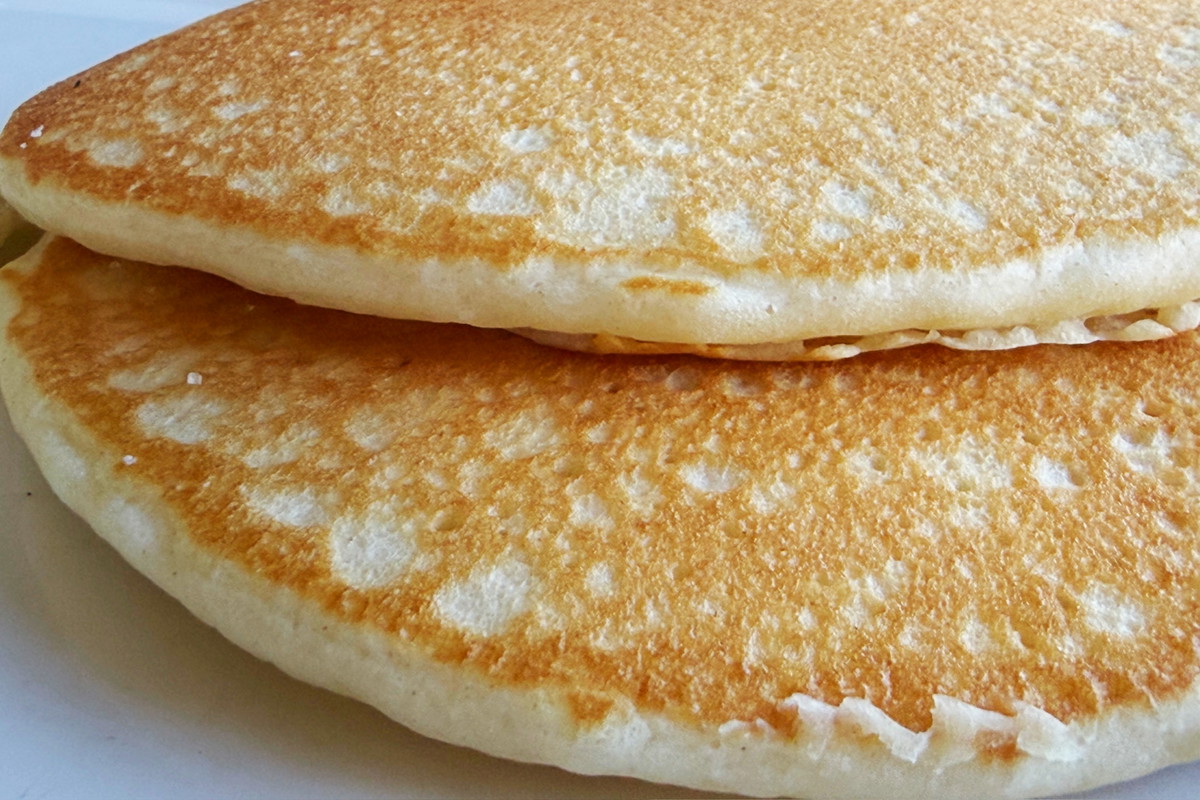
There is perhaps no breakfast more iconic than the pancake. It is the definition of "comfort food"—warm, fluffy, and essentially a vehicle for butter and syrup. But this particular recipe isn't just about nostalgia; it’s about speed. By utilizing self-rising flour, we strip away the fuss of measuring separate leavening agents, getting you from "hungry" to "eating" in under 15 minutes.
But before you flip that first cake, take a moment to appreciate the legacy on your plate.
A 30,000-Year-Old Caving Snack Believe it or not, you are partaking in one of humanity’s oldest culinary traditions. Archaeological evidence suggests that Stone Age cooks were making primitive pancakes out of cattail flour and water on hot rocks as far back as 30,000 years ago. Even Ötzi the Iceman (the famous 5,300-year-old mummy found in the Alps) had "pancake-like" charcoal in his stomach!
While the Ancient Romans enjoyed a version called Alita Dolcia ("Another Sweet") with honey and pepper, our modern version relies on a bit more chemistry to get that signature fluff.
The Science of the Rise The secret weapon in this recipe is Self-Rising Flour. Many home cooks view it as a "cheat," but scientifically, it is simply a pre-calibrated mixture of lower-protein flour, baking powder, and salt.
The Lift: The baking powder in the flour is a two-part chemical system (an acid and a base). When it hits the milk and eggs in your bowl, it reacts to release carbon dioxide gas. These bubbles get trapped in the gluten network of the flour, creating the "sponge" structure we love.
The Browning: We add a tablespoon of sugar not just for sweetness, but for color. Sugar accelerates the Maillard Reaction—the chemical interaction between amino acids (proteins) and reducing sugars that gives your pancakes that beautiful golden-brown crust and complex toasted flavor.
So, whisk gently, leave the lumps (they protect the air bubbles!), and enjoy a breakfast that is scientifically formulated to be delicious and historically approved by the Iceman himself.
Directions
Whisk: Combine the self-rising flour and sugar in a bowl
- Mix Wet: In a separate cup/bowl, whisk the milk, egg, melted butter, and vanilla
- Combine: Pour the wet mix into the flour. Stir until just combined (remember, lumps are good!)
- Cook: Cook on a hot, greased skillet until bubbles appear on the surface, then flip